
DEMOCRACY DAY REFLECTION: NIGERIA’S JOURNEY—THE GOOD, THE BAD, AND THE URGENT NEXT STEPS
June 12 is more than a date; it is a reminder of a promise. It calls to mind the courage of Nigerians who insisted that their voices must count, and it honours Chief Moshood Kashimawo Olawale (M.K.O.) Abiola, whose sacrifice became a defining symbol of that struggle.
Democracy in Nigeria did not arrive as a gift, it was demanded, defended, and paid for. Today, as we reflect, we must ask: how far have we come, and how far must we still go?
THE GAINS WE CANNOT IGNORE
Since 1999, Nigeria has sustained an unbroken civilian rule, the longest in our history. That continuity matters. It has allowed institutions to take root, even if imperfectly. Elections, once rare and often violently contested, now occur on schedule. Power has changed hands between parties at the federal level, demonstrating that incumbency is not absolute.
There has also been an expansion of civic space. The media, traditional and digital, have grown more assertive, giving citizens platforms to question authority and shape public discourse.
Civil society organisations have matured, advocating for transparency, electoral reforms, and human rights. In governance, initiatives such as the Treasury Single Account (TSA), Bank Verification Number (BVN), and more recent digital identity and payment systems have improved public financial management and reduced leakages in some areas.
At the subnational level, competition among states has produced pockets of innovation, in infrastructure, education reforms, health insurance schemes, and agricultural initiatives. Nigerian youth, despite daunting odds, continue to excel in technology, entrepreneurship, arts, and sports, projecting a dynamic image of the country to the world.
THE FAULT LINES WE MUST CONFRONT
Yet, democracy is not measured by elections alone. Too many Nigerians still feel distant from the dividends of governance. struggle with poverty, and rising cost of living. Basic services like electricity, healthcare, and education remain inconsistent in some parts of the country
Unemployment and inflation continue to erode dignity and opportunity. Every year, thousands of graduates are released into the labour market. After serving their nation, many return home only to spend years searching for job opportunities.
Sadly, some are pushed toward negative alternatives just to survive.
Public services, power, healthcare, and education, remain inconsistent, often forcing citizens to rely on costly private options.
Elections, while regular, are not always credible in the eyes of the people. Allegations of vote-buying, logistical failures, and post-election disputes persist. When citizens lose confidence in the ballot, democracy itself is weakened.
Corruption remains a stubborn challenge. While anti-corruption efforts have recorded wins, enforcement is uneven and often perceived as selective. This perception erodes trust and undermines the rule of law.
Security concerns, ranging from insurgency and banditry to communal clashes and urban crime, continue to test the capacity of the state. No democracy can flourish where citizens live in fear.
There is also a widening gap between leaders and the led. Political participation outside election cycles is limited, and internal party democracy is frequently compromised by imposition of candidates and opaque processes. For many young Nigerians, politics appears distant, expensive, and closed.
THE UGLY TRUTHS WE MUST ADMIT
If we are honest, some of our deepest problems are self-inflicted. Ethnic and religious divisions are too easily weaponized for political gain.
Public office is too often treated as a pathway to personal enrichment rather than public service. Accountability is weak, and consequences for failure are rare.
We have, at times, normalized mediocrity, celebrating minimal performance while excusing systemic failure.
Our institutions, meant to be stronger than individuals, are still vulnerable to influence and pressure. And while we rightly honour heroes like M.K.O. Abiola, we must ensure that remembrance translates into responsibility, not just ritual.
WHERE DO WE GO FROM HERE?
Nigeria’s democracy can work better, if we choose to make it work. The path forward requires practical, sustained actions:
Strengthen Electoral Integrity:
INEC must continue to improve logistics, transparency, and technology deployment. Electoral offences should be prosecuted consistently.
Political parties must embrace internal democracy, with clear, fair primaries.
DEEPEN RULE OF LAW AND ACCOUNTABILITY:
Anti-corruption agencies need independence, adequate funding, and non-selective enforcement. Court processes, especially election petitions, should be faster and more transparent. Public procurement must be open and traceable.
PRIORITIZE SECURITY REFORM:
Security architecture should be better coordinated, intelligence-driven, and community-informed. Investment in policing, training, and welfare is critical. Citizens must feel protected, not abandoned.
Invest in People:
Education, healthcare, and social protection are not optional, they are the foundation of a stable democracy.
Quality public schools and primary healthcare centres should be accessible in every community.
ECONOMIC INCLUSION AND JOBS:
Support small and medium enterprises with easier access to finance, stable policies, and infrastructure. Expand vocational training and digital skills for youth. A growing economy must be felt in households, not just reported in statistics.
EMPOWER LOCAL GOVERNANCE:
Local governments should be financially and administratively autonomous, with strict accountability. Development must reach the grassroots where it matters most.
CIVIC PARTICIPATION AND MEDIA RESPONSIBILITY:
Citizens must stay engaged beyond elections, through town halls, community oversight, and issue-based advocacy. The media must remain factual, independent, and constructive, resisting misinformation and sensationalism.
National Cohesion:
Leaders must speak and act in ways that unite. Policies should be fair and inclusive, ensuring that no group feels marginalised.
CONCLUSION
Democracy is a journey, not a destination. Nigeria has made meaningful progress, but the distance between promise and reality remains significant.
On this Democracy Day, we honour the memory of M.K.O. Abiola not only with words, but with a renewed commitment to build a system that truly reflects the will and welfare of the people.
The future of Nigeria’s democracy will not be decided by history alone, it will be shaped by the choices we make today.
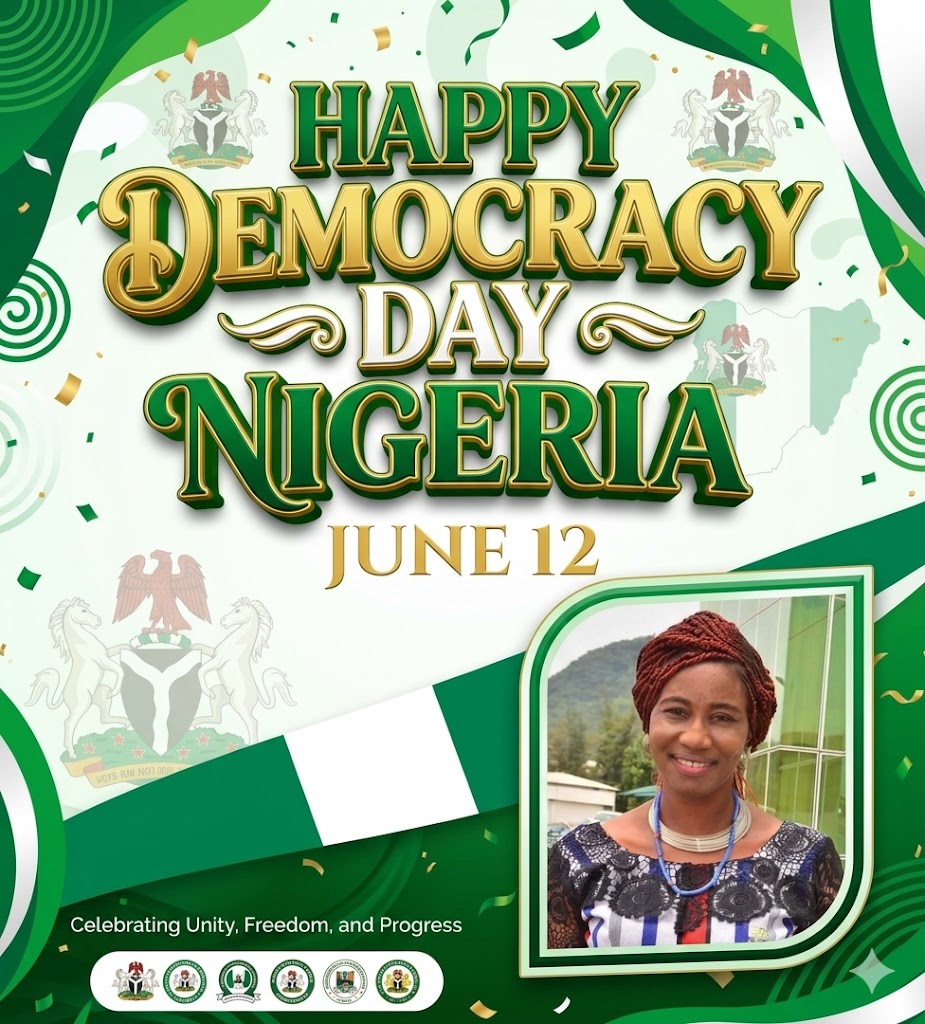
Happy Democracy Day!
May Nigeria be blessed and may we live where no man is oppressed.
AVOYI NWOGU (MSNB),
CEO, BCL