
ARTIFICIAL INTELLIGENCE DID NOT COME TO ERASE HUMAN IMPACT
By Billie Nwogu
There is growing anxiety across the world that Artificial Intelligence, popularly known as AI, has come to take over human jobs, replace human creativity and gradually make people irrelevant. From journalists and teachers to designers, doctors, writers and business owners, many people are asking the same question: What will become of human beings when machines can do almost everything? But perhaps we are asking the wrong question.
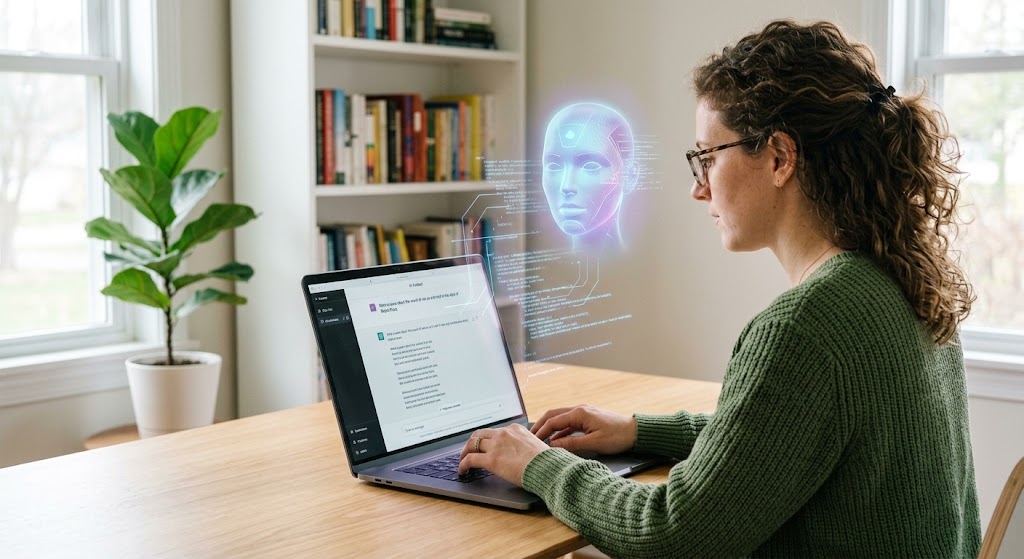
Artificial Intelligence did not come to erase human impact. Rather, it came to complement, strengthen and expand human efforts. AI can process information, generate ideas, write content, analyse data and perform tasks at incredible speed. But before it does any of these things, someone must first think. Someone must identify the problem. Someone must decide what needs to be done. And, in many cases, someone must give AI the right instruction — the prompt.
That is where the human being remains indispensable.
AI does not wake up with a vision for your organisation. It does not naturally understand your dreams, your values, your experiences or the emotions behind your message. You must tell it what you want. You must provide the context. You must guide it towards the destination. In simple terms, AI can help you deliver the unthinkable, but it still needs you to do the thinking.
A powerful AI output often begins with a powerful human thought. The quality of what AI produces is, to a large extent, influenced by the quality of the instruction it receives. If the prompt is shallow, the result may be shallow. If the direction is confused, the output may also be confused. But when a human being brings knowledge, creativity, experience and clear thinking into the conversation, AI becomes an extraordinary tool for turning ideas into reality.
This is why we should not see Artificial Intelligence as a replacement for human intelligence. We should see it as a partner to human intelligence. The calculator did not destroy mathematics; it made calculations faster. The camera did not eliminate creativity; it created new forms of visual storytelling. The computer did not end human productivity; it transformed the way we work. In the same way, AI is not here to remove humanity from achievement. It is here to help humanity achieve more.
The danger, therefore, is not that AI will think for human beings. The greater danger is that human beings may stop thinking because AI is available. That would be a misuse of the technology. AI should challenge us to become more creative, more intentional and more innovative — not more lazy. It should free us from repetitive tasks so that we can devote more time to strategy, imagination, problem-solving and meaningful human interaction.
A journalist, for example, can use AI to organise information, generate research leads or improve the structure of a story. But AI cannot replace the human instinct required to ask the difficult question, understand the emotion in a community, verify the truth on the ground or recognise the public interest behind a story. A designer can use AI to create remarkable concepts, but human vision still determines the message, identity and emotional connection of the final work.
The same applies to business, education, medicine, governance, communication and virtually every area of human endeavour. AI may be the engine, but the human mind remains the driver. The machine may have enormous capacity, but it still needs purpose. And purpose comes from people.
We must therefore move away from the fear that Artificial Intelligence is coming to make human beings irrelevant. The future belongs not necessarily to those who compete against AI, but to those who understand how to use it intelligently without surrendering their own intelligence.
The real power is not simply in asking AI to work. The real power is in knowing what to ask, why to ask it, how to guide it and what to do with the result. That is human impact. That is human intelligence at work.
Artificial Intelligence can generate a thousand possibilities in seconds, but it takes a human being to determine which possibility is meaningful. It can write a speech, but a human being must decide the message worth speaking. It can create an image, but a human being must first imagine the vision. It can analyse the past, but human beings must decide the future they want to build.
So, rather than fear AI, we should learn to work with it responsibly.
Let us continue to think. Let us continue to imagine. Let us continue to create. Then, when necessary, let us give Artificial Intelligence the right prompt and allow it to help us deliver.
Because AI did not come to erase human impact.
It came to complement human effort.
You do the thinking. You provide the vision. You give the instruction. And together, human intelligence and artificial intelligence can deliver the unthinkable.
#AICompliance #youdothethinkingforai
#everyone #AITools